

The United States mounted two consecutive nights of airstrikes inside Iran July 28 and July 29, which CENTCOM said targeted the IRGC. The strikes were framed as a forceful response to Iran’s missile attack on U.S. forces in Jordan the day before, which preempted joint U.S.-Saudi strikes on Iran-linked militias in Iraq. CENTCOM said it hit IRGC positions including military command centres, missile and drone facilities, surveillance and coastal-defense sites, and naval capabilities, and that the aim was to further degrade threats from Iran and its allied forces against U.S. troops, commercial shipping, and neighboring Gulf states.
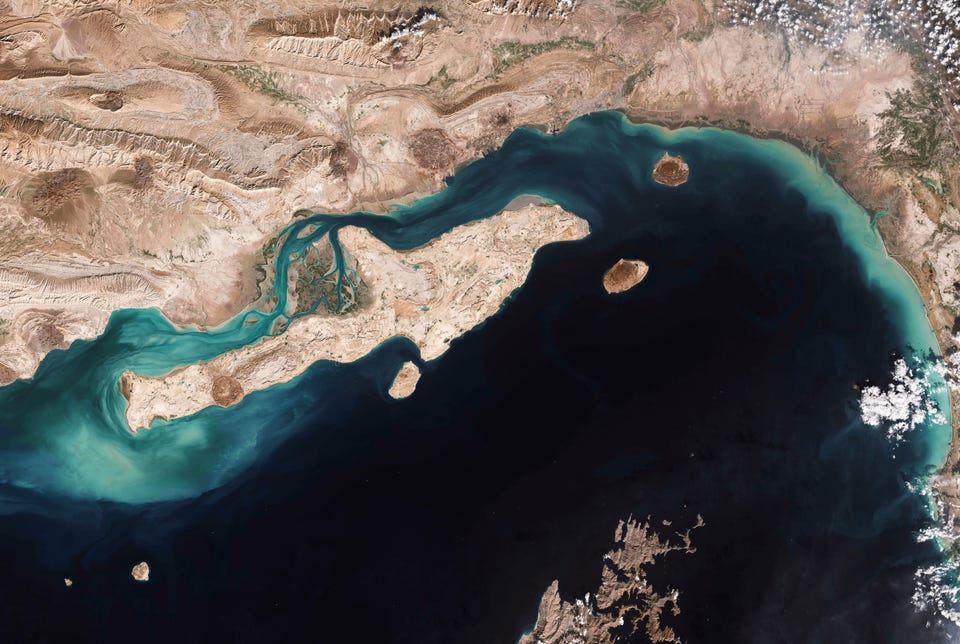
Iranian outlets and local officials reported explosions across a wide area, including Qeshm, Kish, and Abu Musa islands, the waters off Qeshm and the Strait of Hormuz, and points in Khuzestan (Abadan, Shadegan, Arvandkenar, and seven blasts reported in Ahvaz), Bushehr, and Fars provinces (Nurabad Mamasani and Kazerun).
In Qeshm, Hormozgan University of Medical Sciences said a residential building in the Chah-Tangu neighbourhood of Qeshm city was struck, killing a mother, father, and a two-year-old child, with two other children pulled from the rubble and hospitalized. A provincial crisis-management official said the condition of the surviving children was stable. Iranian state broadcaster IRIB aired rescue footage through the night and into the morning. The governor of Bushehr said two points near the town of Chaghadak were hit by what he called American missiles at around 4 a.m. local time, without casualties, and did not specify whether the targets were military or civilian. Zanjan’s IRGC unit announced that three of its members were killed in the strikes “in defense of the homeland,” without giving a location. CENTCOM did not detail its targets, areas of operation, or damage.

Parliament Speaker Mohammad Bagher Ghalibaf, Iran’s chief negotiator, said the United States would pay for the Qeshm deaths. Writing on X, Ghalibaf said Washington “stains its hands with a new crime every day,” calling the strike on civilian homes in Qeshm a continuation of earlier attacks in Minab and Lamerd. Ghalibaf claimed Americans were accustomed to answering battlefield setbacks by shedding innocent blood. Foreign Ministry spokesman Esmail Baghaei separately pressed UN Secretary-General António Guterres to name the United States and Israel explicitly as the war’s principal instigators, saying the UN’s credibility was at stake.
Iran claimed retaliation against three separate bases, across three countries. The IRGC and the regular army issued numbered communiqués - the channel through which Tehran consistently owns its direct attacks - claiming strikes on U.S. forces at Muwaffaq Salti (Al-Azraq) Air Base in Jordan, Ahmad al-Jaber and Ali al-Salem air bases in Kuwait, and Sheikh Isa Air Base in Bahrain. The IRGC’s communiqués 55 and 56, issued under what it called “Operation Nasr 2,” claimed the complete destruction of three American F-35 jets and heavy damage to three others at the Jordanian base, along with the killing of several U.S. officers and technical personnel. Iran’s army, under the 27th phase of “Operation Saeqeh,” said drones hit fighter hangars, satellite-communications systems and equipment warehouses at Ahmad al-Jaber in Kuwait in response to the Qeshm strike. A separate army statement said drones struck power generators, navigation systems, and administrative buildings at Sheikh Isa in Bahrain - home to facilities used by the U.S. Navy’s Fifth Fleet - framing it as revenge for Su-24 pilot Brigadier General Majid Kazemi, killed early in the war.
CENTCOM rejected the Iranian claims in its own public communications. It said no American aircraft, including F-35s, were destroyed or damaged, and that all missiles and drones had been intercepted or failed to reach their targets. Jordan’s armed forces said their air defenses intercepted and destroyed five missiles fired from Iran early Thursday, without casualties. Kuwait’s military said it downed drones that entered its airspace and that falling debris caused damage but no deaths or injuries, though it also said several important military facilities were targeted in what it called Iranian aggression. Separately, Kuwait’s Defence Ministry said an Iranian missile-and-drone attack the previous day hit a building belonging to a Chinese company in the country’s north, killing one worker and causing significant material damage, calling it a heinous act of aggression. China’s Foreign Ministry said no Chinese nationals were harmed and asked Kuwait to protect its citizens and institutions. Neither Bahrain nor the United States had commented on the Sheikh Isa claim as of the time of publication.
A drone strike appears to have hit an Egyptian port for the first time in the war, and no one has claimed it. Egypt’s Cabinet said the fire that damaged two ships at the Mediterranean port of Damietta on Wednesday was caused by a drone, and that authorities were investigating. The oil ministry said Minister Karim Badawi went to the site and that there were no casualties. Reuters, citing trade and security sources, reported the drone struck the U.S.-owned floating LNG unit Energos Winter, with the fire spreading to a second vessel, the Gaslog Salim. The tracking firm Kpler said the incident disrupted one of the region’s key LNG import terminals.
Iran denied involvement, with Foreign Minister Abbas Araghchi calling Egypt an important friend and warning against what he described as Israeli false-flag operations. Yemen’s Houthis also denied responsibility, with a foreign-affairs official calling the reports baseless. President Abdel Fattah el-Sisi, in a call with Spain’s Pedro Sánchez, warned against regional escalation. The Damietta strike matters because it shows how far the war’s geography can stretch: following the July 25 drone attack on an Iranian commercial vessel in the Caspian Sea - which Iran blamed on Ukraine and protested by summoning Kyiv’s envoy - a hit on a U.S.-owned LNG unit in the Mediterranean widens the war well beyond the Gulf. With no claim of responsibility, one reading is that the strike was an indirect signal from Tehran, tying its answer to the Caspian incident and the Ukrainian attack to a target far from the front. Yet this remains an inference, not a confirmed link.
Traffic through the Strait of Hormuz has effectively stopped. Iran’s Persian Gulf Waterway Management body - established by Tehran to control vessel transits after Iran closed the Strait of Hormuz and the U.S. imposed a naval blockade - announced that passage was no longer possible because of continued “aggressive actions” by American forces, and said requests to transit would be reviewed and permits issued once stability returned. The body had earlier published a map of a “monitoring zone” running from a line linking Mount Mubarak in Iran to south of Fujairah in the UAE in the east, to a line linking the tip of Qeshm to Umm al-Quwain in the west, and said transit through required coordination. While the United States sanctioned the body weeks ago, the IRGC, for its part, said the strait cannot reopen while U.S. threats and interference persist, and warned that unnamed countries aiding “the aggressor” would face a hard response.
The IRGC said two more tankers in the Strait of Hormuz were struck and warned shippers to disregard CENTCOM. According to the statement, two “violating” tankers moving under American air escort on an unsafe and illegal path were hit early Thursday, and that four other tankers quickly reversed course. It told shipping and insurance firms to ignore CENTCOM notices and to “ask those who were deceived and met with disaster.” An account linked to the IRGC Navy posted footage of burning tankers captioned “the fate of violation.” CENTCOM had rejected the IRGC’s characterization of the routes as unsafe, saying the main danger to commercial ships and their civilian crews was the Guard’s own threats and attacks, and that more than 20 warships, hundreds of aircraft, and thousands of American personnel were still enforcing the blockade in full. CENTCOM also disputed Iranian reports that a tanker named Nora had slipped through, saying it had not.
With the Strait of Hormuz choked off, the Bab al-Mandeb Strait in the Red Sea - impacted by Houthi threats to Saudi shipping - has carried far more traffic. Kpler data showed 25 commercial cargo vessels transited Bab al-Mandeb on Thursday - 18 entering and seven exiting, including two very large crude carriers and five Aframax-class ships - while only two tankers passed through Hormuz in the same span, both empty.
Saudi Arabia has responded to the maritime pressure by forming a multinational naval coalition. Riyadh’s Defence Ministry announced a Multinational Maritime Defense Alliance on Thursday to secure navigation through the Bab al-Mandeb Strait, the Red Sea, and the Gulf of Aden, after Yemen’s Houthis declared a blockade on the kingdom on July 20 and claimed attacks on Saudi tankers and oil infrastructure. In a joint statement on behalf of 14 member states, the ministry named Bahrain, Bangladesh, Djibouti, Egypt, Jordan, Kuwait, Nigeria, Pakistan, Qatar, Saudi Arabia, Somalia, Sudan, Turkey and the Saudi-backed government in Yemen. It said 51 countries and organizations were invited to a founding meeting in Riyadh, that representatives of 43 countries and an EU delegation attended, and that 14 declared their support while others were still considering. Notably absent from the signatories were the UAE and Oman.
Riyadh and the Houthis exchanged fire earlier this month for the first time in years, testing a truce that had held since 2022. Reuters, citing two regional officials, reported that Saudi and allied assessments concluded the Houthi attacks on the kingdom were coordinated with Iraqi armed groups and launched from Iraqi soil under IRGC direction. This account differs from public statements, in which the Houthis claimed the strikes on Saudi Arabia and Iraq said it was investigating. The Islamic Resistance in Iraq, a coalition of Iran-aligned armed groups, warned that a response to the U.S.–Saudi strikes earlier in the week is “inevitable” and could reach American assets in Saudi Arabia. The bodies of five IRGC members killed in the Iraq strikes were returned to Iran via the Mehran crossing, per IRNA.
The economic costs surfaced on both sides. Saudi state broadcaster Al-Arabiya reported the kingdom’s GDP fell 4.8 percent year-on-year in the second quarter, with “oil activities” down 24.7 percent. In Washington, the Commerce Department reported U.S. growth slowed to 1.5 percent in the second quarter, below the roughly 2 percent expected and attributed in part to the war’s effect on energy prices. Household finances and the economy are expected to figure heavily in November’s midterm elections, when Democrats will try to retake Congress from Trump’s Republicans. Brent crude has traded above $100 a barrel amid the disruption to Gulf exports.
Diplomacy has narrowed but not closed. Pakistan’s Foreign Ministry spokesman Tahir Andrabi said Islamabad was still working to bring Iran and the United States back to the Islamabad MoU, which was signed June 18 with Pakistani mediation. Andrabi urged both the U.S. and Iran to honor commitments and to hold technical talks. Iran has again rejected the Omani proposal, backed by Gulf states, to manage the Strait of Hormuz through voluntary transit fees.
The through-line across these days is that the war now has more participants than principals. What began on February 28 as a U.S.–Israeli assault on Iran now runs across Jordan, Kuwait, Bahrain, Egypt, Iraq and two blocked sea lanes, with a Saudi-led naval coalition on one side and the Houthis and Iraqi militias operating on their own timelines on the other, with many recent strikes unclaimed or disputed. Talks continue and mediators remain engaged, but each new front lengthens the road to a settlement, and each new actor with its own grievance makes it harder for the two governments that started the fighting to stop it.
The cost, as ever, falls on people who had no say in it. A worker killed in Kuwait, a family of three killed in a home on Qeshm, port workers and crews on burning tankers off Egypt and in the Red Sea and the sailors now navigating two contested straits are absorbing decisions made in Tehran, Washington, Riyadh and elsewhere.