

China has stepped up its diplomatic engagement over the Iran crisis, holding high-level talks with Iranian and Omani officials and announcing a regional diplomatic mission as fears grow of renewed U.S. and Israeli military attacks. The developments, unfolding between Friday, October 30, and Monday, November 2, suggest Beijing is seeking a more active role in efforts to prevent another escalation and revive negotiations between Tehran and Washington.
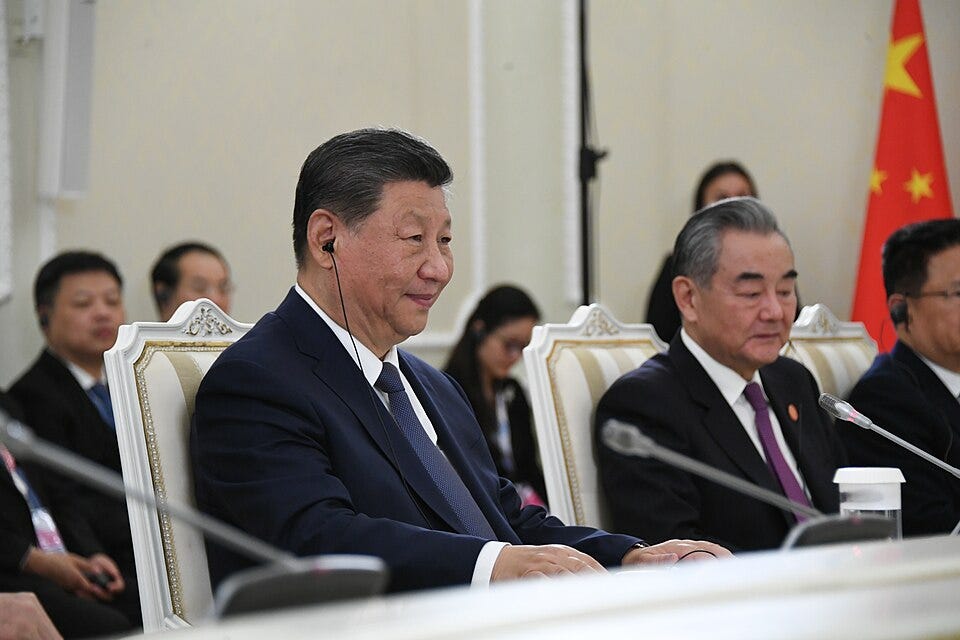

On Monday, November 2, Chinese Foreign Minister Wang Yi met Ali Bagheri Kani, deputy secretary of Iran’s Supreme National Security Council, in Beijing. The meeting coincided with Chinese President Xi Jinping’s talks with Oman’s Sultan Haitham bin Tarik, whose two-day state visit produced a joint statement calling for a comprehensive ceasefire, renewed U.S.-Iran negotiations, and the restoration of safe navigation through the Strait of Hormuz.
China also announced that its special envoy for Middle Eastern affairs, Zhai Jun, would visit Iran, Oman and Saudi Arabia in early to mid-November. The itinerary places three countries central to regional diplomacy on Beijing’s agenda at a moment when negotiations in Qatar remain inconclusive and concerns about another round of fighting are intensifying.
The combination of direct talks with a senior Iranian security official, presidential-level consultations with Oman, and an upcoming regional diplomatic mission represents a notable expansion of China’s visible diplomatic activity. It also raises questions about whether Beijing could eventually move beyond dialogue to participating more directly in efforts to facilitate an agreement.
According to China’s Foreign Ministry, Wang Yi told Bagheri Kani that the continuation and spread of fighting across the Middle East made political negotiations increasingly urgent. He called on the parties to approach the crisis pragmatically and avoid returning to military confrontation. Wang also reaffirmed China’s support for Iran’s sovereignty and security, emphasizing that relations between Beijing and Tehran had remained stable despite international upheaval. He said China was prepared to work with other countries to help restore regional peace.
Bagheri Kani, according to the Chinese account, stressed Iran’s determination to defend its security, sovereignty, and territorial integrity while expressing Tehran’s willingness to engage in negotiations. He welcomed China’s diplomatic initiatives and said Iran hoped Beijing would play a greater role in regional and international affairs. As deputy secretary of the Supreme National Security Council, Bagheri Kani operates within an institution involved in coordinating Iran’s national security policies. His meeting with Wang provided a direct channel between Beijing’s senior diplomatic leadership and Iran’s security establishment at a particularly sensitive moment.
The talks were followed by an equally consequential development in China’s relations with Oman. Sultan Haitham arrived in China on Sunday, November 1, for the first state visit by an Omani sultan since the two countries established diplomatic relations in 1978. Although the visit covered economic cooperation, investment, energy, and technology, the Iranian war featured prominently in the discussions.
During his meeting with the Omani ruler, Xi Jinping warned against allowing the Middle East and the Persian Gulf region to become arenas for competition among major powers. He expressed China’s willingness to cooperate with Arab countries to promote regional peace and stability. The most concrete diplomatic outcome was a 20-point joint statement issued on Monday, November 2, in which China and Oman explicitly called on Iran and the United States to pursue a comprehensive ceasefire, return to the Islamabad Memorandum of Understanding, and resume negotiations toward a comprehensive agreement addressing the nuclear issue.
The statement also called for the restoration of normal and safe navigation through the Strait of Hormuz, with both countries agreeing to maintain communication on matters concerning the waterway. Oman welcomed a greater Chinese role in establishing lasting regional security, while Beijing endorsed Muscat’s longstanding mediation efforts and its role in addressing regional disputes.
The language is important because it moves beyond general expressions of concern. China and Oman identified specific diplomatic objectives, including a ceasefire, renewed negotiations, a nuclear agreement, and the reopening of a maritime passage that has become one of the central points of contention in the conflict.
Their cooperation could also have practical significance. Oman has longstanding diplomatic channels with both Tehran and Washington and has repeatedly facilitated negotiations between them. China, meanwhile, maintains close economic and political relations with Iran while possessing substantial influence in regional energy markets and relations with Persian Gulf governments.
However, there has been no public announcement of a formal China-Oman mediation mechanism, nor confirmation that Washington has accepted a direct Chinese role in the negotiations. For now, the developments indicate growing coordination rather than an established negotiating framework.
In August, Muscat and Tehran discussed a phased framework for restoring navigation through the Strait of Hormuz, including a temporary maritime corridor and arrangements for clearing mines. Those discussions demonstrated that Oman was already involved in addressing one of the most difficult practical issues arising from the war. The latest China-Oman statement places those maritime concerns within a broader effort to secure a ceasefire and resume political negotiations.
The diplomatic activity comes as the existing negotiating process faces substantial obstacles. Iranian representatives left Qatar on Sunday, November 1, following discussions with mediators over a possible agreement to end the war. A draft proposal remained under consideration, but no final understanding had been reached.
On Monday, Iran publicly outlined conditions under which it could reopen the Strait of Hormuz and resume nuclear negotiations with Washington within two days. The proposal included demands for the lifting of the American blockade of Iranian ports, relief from restrictions on Iranian oil, and ceasefire arrangements covering Lebanon. Tehran also proposed that ships transit the Strait of Hormuz through a route coordinated with Oman and under Iranian supervision. Washington has not publicly accepted the proposal.
The differences between the two sides remain considerable. The United States wants Iran’s nuclear activities addressed in negotiations, while Tehran has sought to prioritize the cessation of military operations, economic restrictions, and security arrangements while delaying detailed concessions on the nuclear program.
These unresolved disputes are unfolding against warnings that the United States and Israel could undertake another major military escalation. Regional officials have expressed concern that renewed attacks would produce a broader and more destructive war, threatening energy infrastructure, maritime trade, and the security of neighboring countries. The Financial Times reported on Monday that Middle Eastern diplomats feared additional American and Israeli strikes against Iranian nuclear, missile, and electricity infrastructure after the November 3 U.S. midterm elections. Iranian officials have warned that renewed military action would trigger retaliation, increasing fears that another escalation could extend across the region.
Russia has also voiced concern about the possibility of further attacks. On Monday, Russian Foreign Ministry spokesperson Maria Zakharova warned about reports of preparations for renewed military operations against Iran. Moscow called for diplomatic efforts to resolve the crisis and cautioned against further destabilization.
Russia’s position reinforces its broader opposition to military pressure against Tehran. Moscow maintains strategic relations with Iran and has repeatedly emphasized political negotiations as the preferred means of addressing the conflict. Yet Russia’s public warnings should not be confused with participation in a coordinated diplomatic initiative alongside Beijing and Muscat. No such arrangement has been formally announced.
The emerging picture is therefore one of overlapping diplomatic efforts. Qatar remains involved in discussions with Iranian representatives and mediators. Oman is seeking to revive negotiations and restore maritime navigation. China is engaging senior Iranian officials and preparing consultations with regional governments, while Russia is publicly opposing renewed military escalation.
What distinguishes the latest developments is China’s increasingly visible participation at several diplomatic levels simultaneously. China’s interest in preventing another escalation is substantial. It is a major purchaser of Iranian oil, depends heavily on Middle Eastern energy supplies, and has an economic interest in restoring reliable shipping through the Strait of Hormuz. Beijing also has experience facilitating regional diplomatic agreements. Its role in the 2023 restoration of relations between Iran and Saudi Arabia demonstrated its ability to help conclude an agreement when both sides were prepared to compromise.
The present conflict, however, is considerably more complicated. A settlement would require agreement between Iran and the United States on military operations, sanctions, maritime security, and nuclear activities. China’s influence in Tehran does not necessarily give it comparable leverage over Washington. For that reason, the latest developments do not establish that Beijing has become a formal mediator or that a diplomatic breakthrough is imminent.
They do, however, suggest that China is positioning itself to play a larger role if the negotiations move into a broader international framework. Oman could provide established diplomatic channels, while Beijing could contribute political influence and economic weight. Whether this emerging diplomatic engagement can prevent renewed fighting remains uncertain. With negotiations still unresolved and warnings of another military escalation growing, the coming days will test whether China’s more active involvement can help move the parties closer to an agreement or whether the region faces another destructive round of war.