

The reported Israeli-U.S. attack on Iran’s South Pars gas field appears to mark a critical turning point in the ongoing war that will significantly raise the risk of regional escalation and global economic disruption. Unlike earlier phases of the conflict, which largely focused on military assets, missile systems, and command structures, this development represents a direct shift toward targeting substantial energy infrastructure at the heart of the global economy.
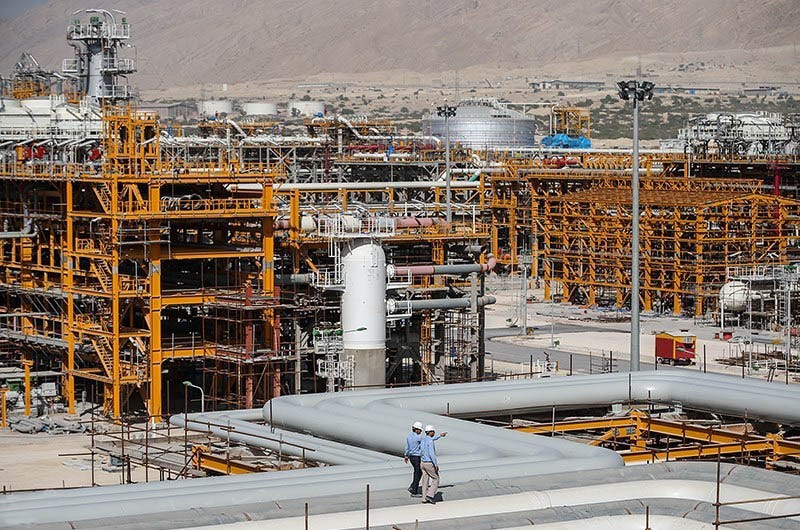
According to Iranian officials and multiple reports, phases 3, 4, 5, and 6 of the South Pars gas field in Asaluyeh were struck, with parts of the facilities taken offline to contain fires and prevent further damage. Local authorities stated that the situation is under control and no casualties have been reported at the site, though emergency operations continue.
.jpg)
South Pars is not an ordinary facility, it is the largest natural gas field in the world and a shared resource between Iran and Qatar. Roughly one-third lies in Iranian waters and two-thirds in Qatari territory, making it one of the most strategically sensitive energy assets globally. The field holds massive gas reserves and condensates that are central not only to Iran’s economy but also to global energy supply through Qatar’s LNG exports.
Targeting such a shared energy structure immediately internationalizes the conflict. Qatar condemned the strike as “dangerous and irresponsible,” warning that attacks on energy infrastructure threaten global energy security, regional stability, and the environment. This reaction highlights that the consequences extend far beyond Iran, directly affecting neighboring states and global markets.
The market response underscores the seriousness of this escalation. Following the attack, oil prices surged above $108 per barrel, reflecting growing fears that the war is entering a phase where energy supply disruptions are becoming a central risk rather than a secondary concern. The Strait of Hormuz, through which approximately 20 percent of global oil supply typically passes, is already under pressure due to military activity and disruptions to maritime traffic. Any further escalation involving energy infrastructure could significantly impact energy production and prices, global shipping, insurance markets, and supply chains.
At the same time, Iran has issued explicit warnings that energy infrastructure across the region could be targeted in retaliation. Officials stated that facilities in Saudi Arabia, the United Arab Emirates, and Qatar, including major refineries and petrochemical complexes, have become “legitimate targets.” This signals a shift toward intensified reciprocal attacks on vital energy systems across multiple countries.
The war’s expansion to the shared energy architecture of the Persian Gulf will further disrupt some of the world’s most critical oil and gas hubs. Israel has significantly expanded its targeting doctrine, openly declaring that senior Iranian officials are now direct targets. Israeli Defense Minister Israel Katz stated that the military no longer requires additional authorization to eliminate high-ranking Iranian officials once operational intelligence is complete. In this context, Israeli officials have claimed that Esmail Khatib, Iran’s Minister of Intelligence, was targeted and killed in recent strikes in Tehran, though Iran has not officially confirmed his death at the time of reporting.
The reported killing of a sitting intelligence minister, if confirmed, would represent another escalation in the war’s leadership targeting strategy, moving beyond military commanders to core figures in Iran’s internal security and intelligence apparatus. This follows earlier assassinations of senior Iranian figures and suggests a deliberate effort to degrade decision-making structures at the highest levels of the state.
Separate military operations continue to intensify across multiple fronts. The United States reported conducting strikes on Iranian missile sites near the Strait of Hormuz, while Iran has launched additional waves of missile and drone attacks targeting Israel and U.S. bases in the region. In Israel, damage was reported at Ben Gurion airport and in Tel Aviv, where a munition destroyed an apartment building in the Ramat Gan area, killing a couple in their 70s. This reflects an expanding cycle of retaliation that is now intersecting with both leadership, economic and civilian infrastructure.
Inside Iran, the war’s domestic and political dynamics are also becoming clearer. Despite calls from Israeli Prime Minister Benjamin Netanyahu and Reza Pahlavi to use the Charshanbe Suri (Fire Festival) Tuesday evening as a moment for anti-government protests, there were no credible reports of widespread demonstrations against the government. Instead, reports indicate that pro-government supporters were present in the streets and that security forces maintained control across major cities.
This suggests that the conditions for large-scale protests capable of threatening the government amid war are not present. Rather than triggering internal destabilization, the ongoing war - including the targeting of national infrastructure such as South Pars - appears to be reinforcing a security-driven environment in which the state retains control.
Moreover, the shift toward targeting economic and energy assets may be influencing public perceptions. For segments of the population who may have previously viewed external pressure or conflict as a potential catalyst for political change, the visible damage to national infrastructure, without any clear pathway to political transformation, could alter those calculations. Instead of accelerating internal change, such attacks risk strengthening concerns about national loss and instability without delivering meaningful political outcomes.
Inside Iran, the humanitarian toll continues to grow. Hundreds of sites in Tehran have been struck, millions of civilians displaced, and emergency housing provided for affected populations. At the same time, mass funeral ceremonies for senior officials and military personnel, including figures such as Ali Larijani and other high-ranking individuals, highlight both the scale of losses and the symbolic mobilization of the state.
Taken together, these developments indicate that the war has entered a new and far more dangerous phase. The attack on South Pars, combined with the expansion of leadership targeting, threats against regional energy infrastructure, and the absence of internal destabilization, represents a shift from conventional military confrontation toward systemic and strategic escalation.
If energy infrastructure continues to be targeted and high-level assassinations intensify, the consequences are likely to extend far beyond the immediate parties to the conflict. In this sense, the attack on South Pars—alongside the reported killing of Iran’s intelligence minister and the lack of internal unrest—should be understood as a warning signal. The conflict is evolving into a crisis with direct implications for regional stability, global energy security, and international economic order. It may already be too late to prevent the war from deepening and causing further regional and global shockwaves.
Injustice anywhere is a threat to justice everywhere. The United States and Iran were engaged in negotiations when, suddenly, conflict erupted. This escalation has been driven by reckless decisions, and it is deeply concerning that President Trump may have been misled by his advisors into entering this war. Those responsible for such counsel should be held accountable.
A ceasefire must be implemented immediately. At a time when Americans are already struggling—facing gasoline prices above $3.50 a gallon and growing fears of economic decline—the cost of war only adds to the burden. History has shown that restraint is possible; even past leaders chose to avoid direct conflict with Iran.
It is time to prioritize peace. As reflected in John 3:16, the message of Jesus is one of love and peace, not war. American taxpayer money should not be spent on another prolonged and costly conflict in the Middle East. Ceasefire now.