

Another major confrontation has erupted in Saravan, killing both the commander and intelligence chief of a local Revolutionary Guards operational headquarters. Armed men have also clashed with security forces in Zahedan, the provincial capital, while police have come under attack near Iranshahr. Together, the incidents indicate that the surge in armed violence documented last week is continuing, spreading geographically and imposing greater costs on Iranian security forces.

A week ago, Iran Unfiltered examined a series of violent incidents in Iran’s Baloch and Kurdish regions and asked whether the country’s widening regional war could intensify longstanding conflicts on its periphery. Since then, the situation in Sistan and Baluchestan has deteriorated further.
The most consequential incident came on September 23 in the Jahadabad area of Saravan, where Iranian security forces and members of the People’s Fighters Front engaged in several hours of heavy fighting. The confrontation came only eleven days after the nine-hour battle in the city’s Bakhshan area previously reported by Iran Unfiltered. According to the Revolutionary Guards’ Quds regional headquarters, the operation was jointly conducted by the IRGC, the Intelligence Ministry and police. Iranian authorities said five members of what they described as a “terrorist-Takfiri” group were killed and that weapons and ammunition were recovered from their hideout.
The fighting also inflicted significant losses on the local IRGC command. The Quds headquarters confirmed that Brigadier General Hossein Zarifi, commander of the IRGC’s Shahid Sajjad operational headquarters in Saravan, and Major Ahmad Herati Zeraati, the headquarters’ intelligence chief, were both killed. Haalvsh, a Baloch outlet that closely covers the province, reported that at least 13 other security personnel were seriously wounded, although that figure has not been independently verified.
The People’s Fighters Front separately confirmed that its members were involved. The group said Iranian security forces attacked a location where its fighters were based in Jahadabad, prompting reinforcements to enter the fighting in support of those who had been surrounded. It said four of its fighters were killed — three from the original group and one from the reinforcements. The competing accounts of how the confrontation began and the overall casualty toll cannot be independently verified.
Videos circulated on social media showed heavy gunfire, flames and black smoke rising from a residential building. The Balochistan Human Rights Documentation Network reported that security forces used a quadcopter to locate the armed men and blocked roads around the fighting while using light and heavier weapons.
This was the second prolonged battle between Iranian security forces and the People’s Fighters Front in Saravan in just eleven days. In both cases, the armed group says it sent additional fighters to support members surrounded by security forces. The latest confrontation ended with two senior figures in the local IRGC command dead. Two battles are not enough to establish that the People’s Fighters Front has developed fundamentally greater military capabilities or can sustain a broader insurgent campaign. But repeated, hours-long engagements involving reinforcements and substantial security-force casualties raise the possibility that the conflict around Saravan is moving beyond a pattern dominated by ambushes, assassinations and hit-and-run attacks.
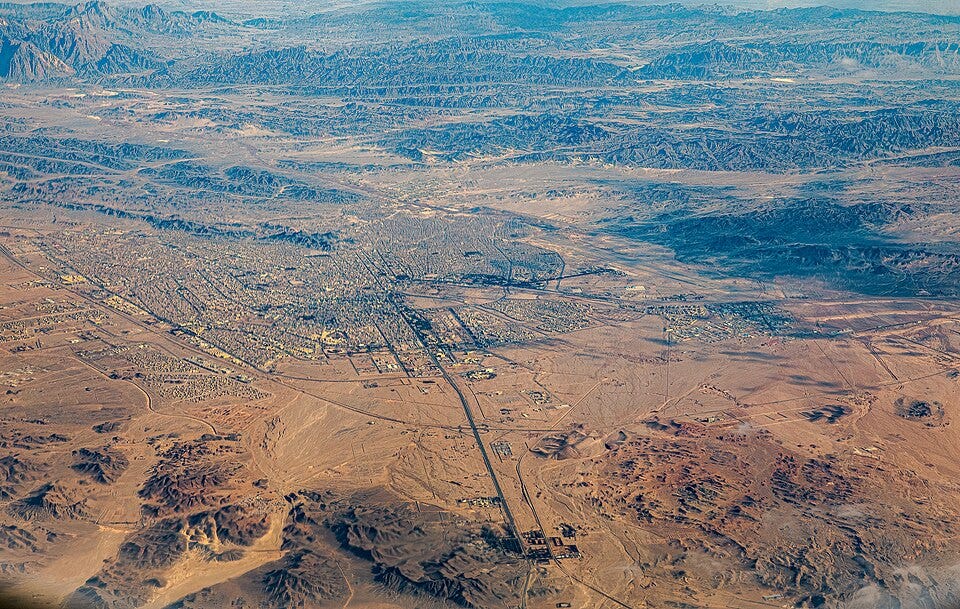
The escalation is also no longer confined to Saravan. On September 18, armed violence reached Zahedan, the provincial capital and largest city in Sistan and Baluchestan. According to Iranian state media, IRGC forces patrolling near University Street encountered a suspicious vehicle, leading to a gun battle in which two occupants were killed and another arrested. Local reports described sustained shooting and a substantial security deployment in the surrounding area.
The location is significant. Zahedan is the political, administrative and security center of the province and, unlike Saravan and many areas historically associated with cross-border militant activity, is not an immediate border city. Armed confrontation inside the provincial capital makes it harder to explain the recent escalation primarily as a problem of infiltration or insecurity along the Pakistani frontier.
The violence has also extended farther west. On September 21, gunmen opened fire on a vehicle carrying police officers on the Bazman-Iranshahr road. Police Captain Alireza Mehrabi was killed and three other officers were wounded. Provincial police described the shooting as a terrorist attack. No organization had publicly claimed responsibility when the incident was initially reported.
The two Saravan battles can be linked because the People’s Fighters Front has acknowledged its involvement in both. There is no evidence, however, that the Zahedan confrontation or the attack near Iranshahr involved the same organization or formed part of a centrally coordinated campaign.
What has changed since Iran Unfiltered examined the issue last week is the combination of frequency, geography and intensity. The September 12 Saravan battle could have been an unusually intense but isolated confrontation in a volatile border area. Eleven days later, the same armed coalition was involved in another hours-long battle there, while armed incidents were also occurring elsewhere in the province.
Notably, the Iranian government is portraying the escalation through the lens of the wider regional war. Following the latest Saravan confrontation, the IRGC’s Quds regional headquarters accused the United States and Israel of seeking to activate and strengthen what it called “terrorist-Takfiri groups” in southeastern Iran after failing to achieve their objectives in the war.
Iranian authorities have not publicly presented evidence establishing that Washington or Israel directed or supported the recent attacks. Baloch armed opposition also long predates the current regional war. The People’s Fighters Front itself was formed before the latest escalation through the consolidation of several existing armed organizations. Instability in Sistan and Baluchestan has deep domestic roots. The province contains a much wider spectrum of religious, political and civil activity that should not be conflated with armed militancy. Longstanding Baloch grievances include economic marginalization, discrimination, inadequate development, political representation, Sunni religious rights and the conduct of security forces.
As violence increases, it is important to distinguish some of these grievances. A broader security response that treats peaceful political activity, civil society and armed militancy as part of the same threat could deepen existing tensions rather than contain them.
The regional war nevertheless changes the environment in which these longstanding conflicts are unfolding. Iran is simultaneously confronting external military pressure, protecting critical infrastructure and shipping routes, managing severe economic strains and trying to prevent armed organizations from exploiting vulnerabilities inside the country. For armed groups already fighting the Islamic Republic, that environment could create opportunities; for Tehran, it creates greater pressure to prevent local violence from developing into a larger internal security challenge.
The escalation in Sistan and Baluchestan is becoming harder to dismiss as an isolated flare-up as it becomes more active, geographically dispersed and costly for Iranian security forces. Whether this is a temporary escalation or the beginning of a more sustained phase remains unclear. But the events of the past two weeks provide stronger reason to watch Sistan and Baluchestan as one of the places where Iran’s external war and its longstanding internal conflicts could increasingly intersect.