

Israel has claimed that it has killed Ali Larijani, one of the most influential figures in the Islamic Republic’s political and security system, in an airstrike on March 17. As the time of publication, Iran has not officially confirmed his death, but if verified, it would constitute one of the most serious blows to the Iranian state through two and a half weeks of war.
Ali Larijani was not merely the Secretary of the Supreme National Security Council; he represented a rare type of actor within the system - one who bridged security institutions, political leadership, and strategic decision-making. Over decades, he served in key roles including positions within the Revolutionary Guard structure, Minister of Culture, head of state broadcasting, Secretary of the Supreme National Security Council, and Speaker of Parliament for three terms. More recently, he operated at the highest advisory levels of the state. His influence extended beyond formal titles; he was deeply embedded in elite networks and came from one of the most prominent political families in the Islamic Republic. His role became even more significant after the death of Ali Khamenei, as figures like Larijani were essential in maintaining internal coordination and continuity.
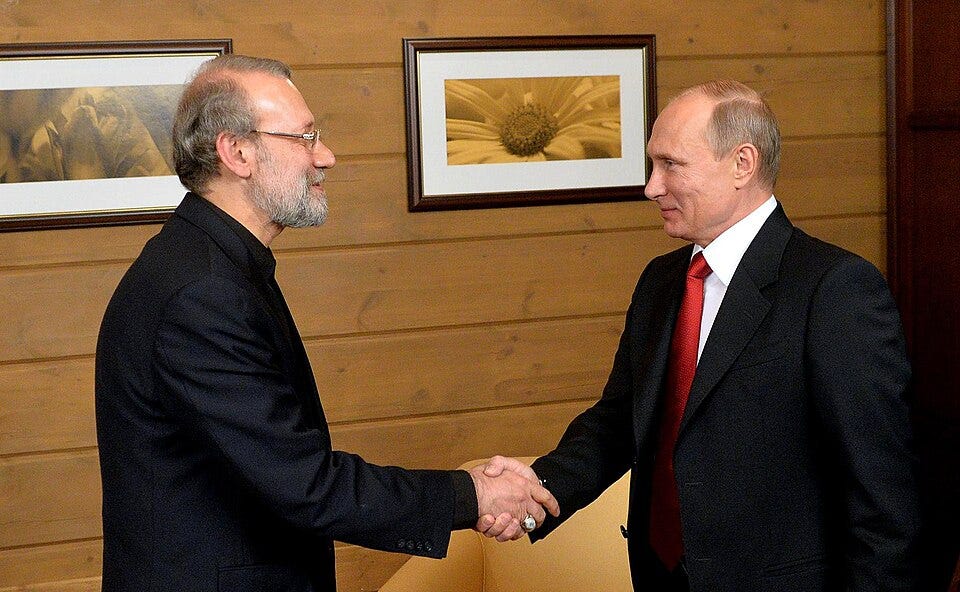

What has made Larijani particularly important is his dual identity as both a regime insider and a pragmatic operator. Although in recent weeks he adopted more hardline and war-oriented rhetoric, historically he was viewed as a flexible and strategic figure capable of navigating internal divisions and managing crises. In a system under extreme wartime pressure, such figures are critical - not because of their ideology alone, but because they help maintain coherence at the top. If his death is confirmed, it would not only remove a senior official but also weaken one of the key mechanisms through which the regime balances internal factions and absorbs external shocks.
At the same time, it is important not to overstate the structural impact of the loss of any individual figure. The Islamic Republic has, over time, demonstrated a “mosaic” or distributed model of governance and security, in which authority, operational capacity, and decision-making are spread across multiple overlapping institutions. This model—visible across the military, intelligence, and political system—has allowed the state to absorb shocks, including the loss of senior figures. Even the earlier assassination of Ali Khamenei did not produce immediate systemic collapse, in part because of this decentralized resilience. Within this context, Larijani’s potential death should be understood as a significant shock, but not a decisive or system-breaking event. The system is designed to adapt, redistribute roles, and continue functioning under pressure, even when key individuals are removed.
Israel also claimed to have killed Gholamreza Soleimani, the commander of the Basij - a paramilitary organization under the control of the Islamic Revolutionary Guard Corps that is often deployed in government crackdowns. Tasnim News Agency confirmed Soleimani’s killing in an “attack by the American-Zionist enemy.” Taken together, these actions suggest that Israel in particular is aiming to degrade Iran’s internal control infrastructure - including institutions responsible for domestic repression and political order. This indicates a strategic shift toward weakening not only Iran’s battlefield capacity but also its ability to maintain internal stability under pressure. Thus far, the system has proven resilient even as it has absorbed the loss of senior figures and some government checkpoints have been targeted.
At the same time, Iranian authorities are signaling heightened concern about the domestic front. Officials have warned that Chaharshanbeh Suri could be exploited to create unrest, while security forces have emphasized the need for public vigilance in what they describe as wartime conditions. The judiciary has also announced measures including asset seizures and severe punishments for alleged collaborators, reflecting a tightening internal security posture. These developments suggest that the leadership is increasingly focused on the risk that external war pressures could intersect with internal tensions, potentially creating a more volatile domestic environment.
The war has continued to impact across the region and has caused significant economic and infrastructure consequences. Persian Gulf states are now directly exposed to Iranian missile and drone operations. Drone strikes have disrupted operations at major energy facilities, including the Shah gas field in the UAE, while repeated attacks on Fujairah’s oil infrastructure have caused temporary shutdowns and fires. Oil loading operations have been intermittently halted, and reports indicate that UAE oil production has dropped significantly, partly due to the ongoing crisis in the Strait of Hormuz. In parallel, Persian Gulf airspace has been temporarily closed as a precaution, and major international airports have experienced disruptions. Given the region’s role as a critical hub for global aviation and energy transport, these developments are producing cascading effects across global supply chains and transportation networks.
The United Arab Emirates has reported intercepting dozens of drones and ballistic missiles in a single day, while Qatar has also intercepted incoming missiles and drones, with at least one projectile landing without causing casualties. Since the beginning of the war, the UAE alone reports facing more than two thousand drone and missile attacks, highlighting the scale and persistence of Iran’s regional strike capability.
Despite sustained U.S. and Israeli strikes, Iran continues to demonstrate operational missile and drone capacity across multiple fronts. Iranian forces have launched repeated waves of attacks targeting Israeli territory as well as regional assets, including reported strikes on strategic industrial and cyber-related facilities. Israeli defense systems remain actively engaged in intercepting incoming threats. These developments suggest that Iran’s retaliatory capabilities remain sufficiently intact to sustain pressure, inflict damage and prolong the conflict.
The war is also expanding into Iraq, where the U.S. embassy in Baghdad has come under one of the most intense waves of drone and rocket attacks since the beginning of the conflict. At least one drone reportedly struck inside the embassy compound. These attacks indicate that the conflict continues to unfold across multiple interconnected theaters—inside Iran, across Israel, throughout the Persian Gulf, and in Iraq—raising the risk of further escalation and reducing the likelihood that the conflict can be easily contained.
Inside Iran, the war is increasingly affecting civilian areas and infrastructure. Reports and visual evidence indicate damage to electricity infrastructure, police facilities and urban neighborhoods in Tehran - including areas such as Niavaran, Shahrak-e Gharb, and around Meydan-e Shohada. While some of these strikes have targeted military personnel, their impact has extended into surrounding civilian areas, impacting daily life in the capital and other bombed facilities. This not only increases civilian risk but also disrupts normal activities in major urban centers.
Data compiled by human rights monitoring groups further underscores the scale and human cost of the conflict. Since the beginning of the war on February 28, aggregated reporting from the Human Rights Activists Network Agency (HRANA) indicates:
• 1,351 civilian deaths, including at least 207 children
• 1,126 military personnel killed
• 622 additional fatalities whose status (civilian or military) remains unclear
These figures highlight the extent to which the war is affecting both civilian populations and military structures simultaneously, with fatalities well higher than the June war. It remains unclear to what extent ongoing internet blackouts may impact the verification of casualties.
At the operational level, the scope and diversity of targets also reflect an intensifying and complex battlefield. In a recent 24-hour period alone, at least 36 distinct sites and facilities were reported damaged or affected, including military installations such as air force bases, IRGC headquarters, and Basij facilities and infrastructure including Mehrabad Airport in Tehran.
In addition, preliminary reports indicate that protected civilian and humanitarian-related sites have also been affected, including a water desalination facility in Nikshahr, an electricity administration building in Tehran, a school in Khomein and multiple residential buildings, including an eight-story structure in Tehran’s Zarafshan area and at least ten other residential units destroyed in airstrikes. While some of these cases may involve proximity to intended targets or secondary damage, their inclusion reflects the increasing overlap between military operations and civilian environments, raising concerns under international humanitarian law and further illustrating how deeply the conflict is penetrating urban and civilian spaces.
The humanitarian and global economic consequences are also intensifying. The continuation of the war threatens to significantly worsen global food insecurity, with projections indicating that tens of millions of additional people could face acute hunger if the conflict persists. Rising energy prices, disrupted shipping routes, and increased operational costs for humanitarian organizations are contributing to global economic strains. Asian economies, which depend heavily on energy flows through the Strait of Hormuz, are particularly vulnerable to prolonged disruption.
Continued leadership targeting, regional escalation, economic disruption, and intensified internal securitization inside Iran indicate that the war continues to surge with no end in sight. Within this context, the reported death of Ali Larijani stands out as a significant political development. If confirmed, it would mark the removal of a figure who embodied the regime’s capacity to mediate between power centers, manage crises, and maintain strategic coherence under pressure.
However, the broader trajectory of the conflict suggests that Iran’s system is not structured around any single individual, but rather around a layered and resilient network of institutions. As a result, while Larijani’s loss would represent a serious shock to the system, it is unlikely on its own to fundamentally alter the regime’s ability to continue the war or maintain internal control. The more decisive factors will be the cumulative effects of sustained external pressure, internal social dynamics, economic strain, and the regime’s capacity to adapt within its existing “mosaic” structure. As the war continues to expand across borders and domains, the interaction between these forces - rather than any single event - will shape the future trajectory of the conflict and the stability of the Iranian state.