

The passing of Akbar Abdi at the age of 66 brings to a close one of the most beloved and versatile careers in the history of Iranian cinema. Abdi died in Tehran on Friday, July 24, after a long illness that had hospitalized him earlier in the year following a heart attack. Across more than four decades and roughly 120 films and television productions, he became woven into the collective memory of several generations of Iranians — a performer who could inhabit a child, an elderly man, or a woman with equal conviction, and who brought laughter into homes through some of the country’s most difficult years. Iran’s Cinema Museum announced his death, which was confirmed by the filmmaker Masoud Dehnamaki and by a senior official at the Ministry of Culture’s performing arts office.
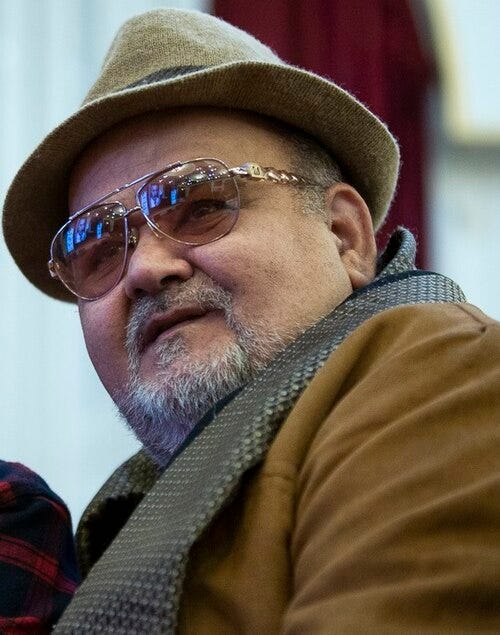

Born in 1960 to an Ardabili father and a Tehrani mother in the working-class Nazi-Abad district of south Tehran, Abdi rose from modest beginnings to national fame. He first appeared before a camera in 1980 and entered television that same year, winning the affection of a generation of young viewers through the children’s series Late for School Again. Popular programs that followed made him one of the most recognizable television faces of the 1980s, before he moved decisively into film.
Though cherished above all as a comedian, Abdi’s gifts reached well beyond comedy, and some of his most admired work was dramatic. He worked alongside towering figures of Iranian cinema, including Dariush Mehrjui in The Tenants, Naser Taghvai in Ey Iran, Mohsen Makhmalbaf in The Actor, and Ali Hatami in both Delshodegan and Mother. His portrayal of Gholamreza in Hatami’s Mother remains among the most admired performances in the country’s cinema and brought him the first of two Crystal Simorghs, Iran’s highest film honor. He received the second more than two decades later, in 2011, for playing an elderly woman in Reza Attaran’s comedy I Feel Sleepy — a breadth of recognition rare for any actor.
Abdi’s remarkable range came to reflect, within a single career, some of the deeper tensions of Iranian cultural life. In Snowman, filmed abroad and banned for years before its eventual release, he played a man who disguises himself as a woman in pursuit of a visa to the West — a role that made the film a sensation even as it tested the boundaries of what audiences were permitted to see. Years later, his most commercially dominant work came in the state-supported Ekhrajiha trilogy directed by Masoud Dehnamaki, films that broke box-office records and drew criticism given the director’s past as a hardline editor and pressure-group figure. That Abdi could move so freely between such different worlds spoke to his singular standing: an artist embraced across a spectrum of Iranians who agreed on little else, because the laughter he offered belonged to all of them.
In his later years, Abdi increasingly turned his voice toward the hardships of ordinary Iranians. In a video shared in his final days, he pointed to the soaring price of basic goods and questioned the worth of a modest government food subsidy against such inflation. On another occasion, he spoke on behalf of retirees struggling to live on meager pensions while officials drew comfortable salaries — giving plain expression to a frustration felt widely across the country. Having spent a lifetime becoming other people on screen, he chose, near the end, to speak candidly as himself about the lives his audiences were actually living.
He also lent his voice to moments of national grief. During the protests that swept Iran in 2022 following the death of Mahsa Amini in the custody of the morality police, Abdi released a video message expressing solidarity with the Iranian people and appealing for compassion, asking how long the nation would be left to mourn — today for Mahsa, he said, and tomorrow for another young person. In that moment, a beloved entertainer placed himself alongside a grieving public rather than apart from it.
Word of his death drew tributes across Iran’s political and cultural divides. President Masoud Pezeshkian wrote that the history of the nation’s art would preserve Abdi’s name among the enduring pillars of Iranian culture, and Foreign Minister Abbas Araghchi described his place in the country’s cinema and collective memory as lofty and lasting. His fellow artists mourned him in more personal terms: the actor Jamshid Hashempour called him a dear friend and said he had been left without a companion in his craft, while the filmmaker Babak Rezvani wrote that the salt of Iranian cinema was gone. Across social media, many Iranians recalled his roles as part of their own family memories — the crowded Norooz afternoons and quiet Friday evenings when households gathered to laugh together at the many faces of Akbar Abdi.
At NIAC, we recognize that Iran’s cultural richness lives not only in its monuments and masterpieces, but in the artists whose work becomes part of the fabric of everyday life. Akbar Abdi was such an artist. Across five decades — through comedy and drama, celebration and censorship, and in his willingness late in life to speak to the economic pain and the grief of ordinary people — his career mirrored both the contradictions and the resilience of the society that produced him. For millions of Iranians, across generations and divisions, he was simply the face that made them laugh, and the voice that reminded them they were not alone.
We extend our heartfelt condolences to Akbar Abdi’s family, friends, and colleagues, and to all Iranians who cherished his artistry. His funeral was held Sunday morning outside Tehran’s Vahdat Hall, after which he was laid to rest in the Artists’ Section of Behesht-e Zahra cemetery — among the many figures of Iranian arts and letters whose memory endures in the culture they helped to shape.