

The two-week ceasefire between Iran and the United States has created a rare and fragile opening for diplomacy after nearly forty days of war. While the arrangement remains highly unstable, its importance lies precisely in the fact that both sides can plausibly present it as a form of victory. That political reality may be the strongest reason the ceasefire could survive serious challenges long enough to produce a broader deal. Yet, while the ceasefire has granted a temporary reduction in the scope of the war, conflicting perspectives on what the ceasefire may achieve could ultimately doom it before negotiations even kick off.
American officials and President Donald Trump have portrayed the ceasefire as the product of battlefield success and coercive leverage, arguing that the United States achieved its principal military aims and compelled Iran back to the negotiating table. The White House has also framed the potential and partial reopening of the Strait of Hormuz as a major strategic gain, particularly at a moment when energy markets and global shipping had been thrown into turmoil. This narrative can be sold domestically, even if it is at odds with perceptions of what the war could achieve at the outset.
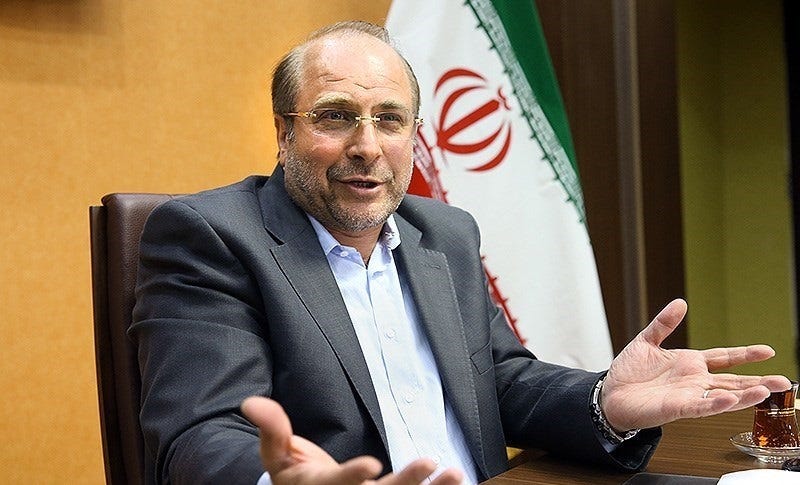

From Tehran’s perspective, however, survival itself is being cast as victory. The war appears to have begun on the assumption that Iran was too weak, internally fractured, and strategically overextended to withstand a sustained military campaign. Yet from the earliest stages of the conflict, it became clear that this assumption was flawed. Even after the loss of senior leaders and commanders, the Iranian state retained enough command capacity to continue operating, sustain the war effort, and preserve regime continuity. It also succeeded in projecting resilience at home, remobilizing supporters and encouraging visible public participation in wartime activities. Iranian authorities and aligned media have presented this endurance - not the absence of damage, but the ability to absorb it and remain standing - as proof that the Islamic Republic was not broken by the war.
That matters politically. Before the war, Iran was already suffering under decades of sanctions and severe economic pressure. The January protests - the largest wave of unrest since the revolution - highlighted deep internal economic strain. For Iran’s leadership, any negotiated outcome that meaningfully reduces sanctions, eases economic pressure, and prevents a return to war would amount to a major strategic achievement. If Tehran can emerge from this crisis with sanctions relief, recognition of a favorable negotiating framework, and stronger regional positioning, it may end up in a better position than expected before the war began.
The ceasefire has, for now, avoided a much wider catastrophe. After Trump issued an ultimatum demanding that Iran reopen the Strait of Hormuz, he escalated rhetorically, even threatening the end of Iranian “civilization.” Yet within hours, diplomacy accelerated. Iran responded defiantly but left room for negotiation. Pakistan, acting as a key mediator, urged de-escalation. Ultimately, a two-week bilateral ceasefire was announced, conditioned on the safe reopening of the Strait of Hormuz. Iran confirmed it would comply if attacks stopped and passage resumed in coordination with Iranian armed forces. The ceasefire has taken place, albeit not without near-immediate claims of violations that risk collapsing the process.
This sequence underscores a central lesson of the war: the Strait of Hormuz has emerged as the most decisive strategic leverage point. Iran demonstrated that its most powerful tool was not only its missiles or nuclear program, but its ability to disrupt one of the world’s most vital maritime chokepoints. That disruption placed immense economic and political pressure on the United States and its partners. Reopening the Strait of Hormuz became an urgent global priority, with oil prices falling and markets stabilizing immediately after the ceasefire.
Keeping leverage over Hormuz is itself a major strategic win for Iran. If Tehran can maintain a recognized role in regulating maritime passage - including generating revenue through navigation fees - this would represent a gain far beyond pre-war expectations. In this scenario, the war would not only have failed to weaken Iran, but may have enhanced its geopolitical and economic leverage. Such a development could also increase Iran’s influence over neighboring Arab states, whose economies remain deeply dependent on shipping routes and energy exports through the Persian Gulf.
Both sides have incentives to preserve the ceasefire, even amid concerns about where it will ultimately lead. The United States needs a political solution to stabilize energy markets, protect the global economy, and potentially restore assurances regarding the future of the Iranian nuclear program. Military action alone has not resolved these challenges. A diplomatic framework remains essential.
Iran, meanwhile, has equally strong reasons to maintain the ceasefire. The country has suffered serious military losses, damage to infrastructure, and economic strain. Yet it can still present the war domestically as a symbol of resistance, while pursuing sanctions relief, access to frozen assets, and economic recovery. The terms could lead to Iran’s most significant gains in years.
At the same time, the war demonstrated that Iran retained the capacity to impose significant costs on its adversaries. Iran was able to inflict real damage on U.S. military assets across the region, despite decades of American military buildup. Reports indicate that U.S. bases came under sustained pressure, equipment losses occurred, and operational costs were extremely high, underscoring that the war was not one-sided.
Iran also showed again that it could strike Israel effectively, even against advanced defense systems such as Iron Dome, Patriot, and THAAD. While these systems mitigated damage, they did not fully prevent missile penetration, and lethal strikes were recorded. Other Israelis were forced to bunkers on a daily basis, causing strain on the population.
At the same time, the ceasefire remains deeply fragile. One of the most immediate threats is the hundred simultaneous Israeli military attacks in Lebanon, including Beirut, which both Israeli officials and President Trump asserted are not covered by the ceasefire. Yet, Iranian Foreign Minister Abbas Araghchi noted that Pakistani Prime Minister Shehbaz Sharif’s announcement of a ceasefire included Lebanon in the ceasefire. Per Sharif’s post on X, “With the greatest humility, I am pleased to announce that the Islamic Republic of Iran and the United States of America, along with their allies, have agreed to an immediate ceasefire everywhere including Lebanon and elsewhere, EFFECTIVE IMMEDIATELY.” Likewise, apparent United Arab Emirates attacks on Iranian refineries in the Persian Gulf triggered serious retaliation, with Iran striking the UAE, Bahrain and Kuwait. Finally, disputes over what may or may not be in a final deal - including Iranian enrichment - may stop the negotiations before they even start.
Parliamentary Speaker Mohammad Bagher Ghalibaf threatened to terminate Iranian participation in the ceasefire and negotiations in response to these apparent violations. Ghalibaf, who could serve as a negotiator for Iran, pointed to the attacks in Lebanon, the city of Lar and an apparent American denial of Iran’s right to enrichment as grounds to halt the ceasefire and future negotiations. With these statements pushing the ceasefire to the brink, Vice President JD Vance tried to calm the waters while defending President Trump’s seemingly contradictory statements, arguing that there was a genuine misunderstanding over Lebanon and using a marital metaphor to argue that sometimes there are agreements not to do certain things, even if at the end of the day they have a right to do them.
Even if this rhetoric calms the waters, each violation undermines trust and risks escalation. Diplomacy may still move forward, even amid ongoing distrust. The United Nations has deployed a special envoy to engage Iran, while Pakistan may host follow-up negotiations in Islamabad as soon as Friday. Regional and international actors have welcomed the ceasefire as a critical first step toward de-escalation.
The political challenge now is taking two divergent visions for peace and making them a sustainable agreement. Both sides will need to present any future agreement as a victory. The United States seeks a deal that limits Iran’s nuclear program and restore passage through the Strait of Hormuz, while Iran seeks recognition of its perceived rights, resilience, regional role, and negotiating strength. The success of diplomacy may depend less on trust and more on whether both sides can claim success domestically.
That is why this ceasefire matters. It creates a narrow but critical overlap of interests. The United States needs an exit from a costly war and economic instability. Iran needs sanctions relief and protection from further escalation. Both sides can claim they stood firm. That may be enough to sustain the diplomatic process. If Iran secures meaningful economic relief and long-term leverage - especially over Hormuz - it could emerge with gains far beyond survival. If the United States stabilizes the region and reaches a workable nuclear framework, it too can claim success.
For now, the ceasefire is fragile, incomplete, and contested. But after a war that proved far more costly and unpredictable than expected, even a fragile ceasefire may be the only viable path away from a wider disaster.
United States of Israel lies.