

Iran has emerged from the recent war in a position that defies many initial expectations. Militarily, the country demonstrated a far greater level of resilience and operational capacity than anticipated, managing to withstand tens of thousands of bombs dropped by the United States and Israel and supported by their partners. Yet Iran’s government did not collapse or concede strategic defeat. The war did not end with Iran’s capitulation; rather, it resulted in a tense equilibrium, where neither side achieved a decisive victory.
Yet while the battlefield outcome may be interpreted as a form of strategic endurance, the economic consequences tell a deeply troubling story. The conflict has pushed Iran’s already fragile economy into a multi-layered crisis, where destruction, inflation, unemployment, and structural weaknesses are reinforcing one another.
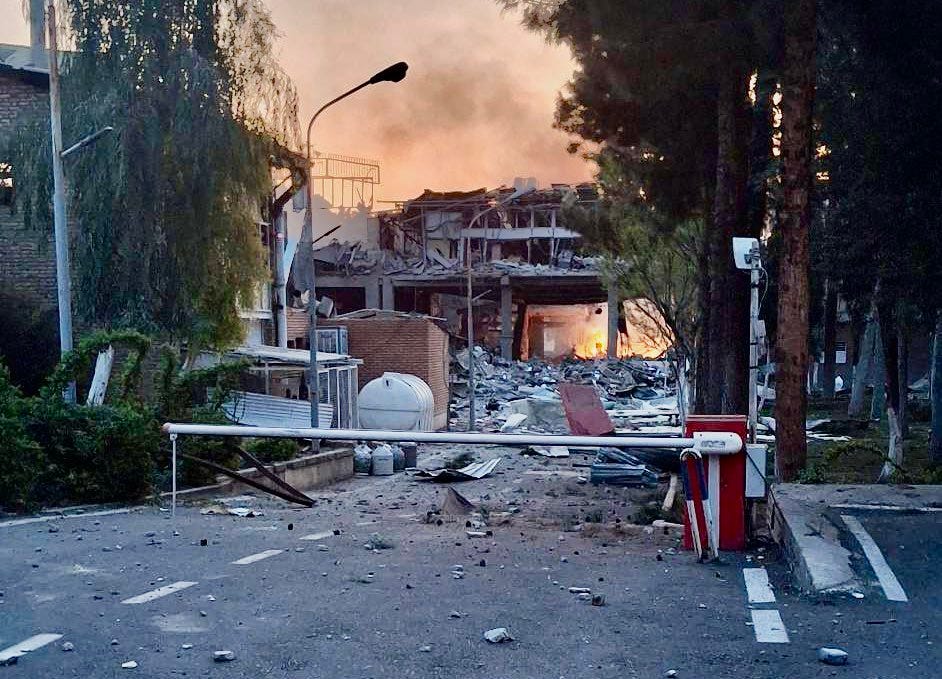

The most immediate and visible impact has been physical devastation. More than 100,000 residential and commercial units were damaged, with tens of thousands of homes affected in Tehran alone and thousands completely destroyed or rendered uninhabitable. Reconstruction costs have already reached tens of trillions of tomans, placing immense pressure on both households and the state. But the deeper issue is not just the scale of destruction, it is the economic displacement it creates, forcing resources away from development and into survival.
This shift has profound macroeconomic consequences. Capital, labor, and credit are being redirected from productive investment toward reconstruction. Industries that once generated output and employment are now focused on repairing losses rather than expanding capacity and production. In effect, the war has replaced the potential for economic progress with the need for economic recovery, a transition that historically reverses growth and diminishes productivity.
At the industrial level, the damage is even more consequential. Key sectors - including energy, petrochemicals, steel, and manufacturing - have been partially disrupted or shut down, with some facilities expected to take months or years to return to full capacity. These disruptions have triggered cascading effects across supply chains, forcing smaller firms to suspend operations and leaving large segments of the workforce either unemployed or underemployed. In regions dependent on industrial clusters, the shock has translated into localized economic collapse.
Transport and infrastructure damage has compounded the problem. Ports, railways, airports, bridges, and energy networks have all been affected, creating bottlenecks that slow trade and increase costs. Even where infrastructure remains functional, heightened risk and uncertainty have made logistics more expensive and less reliable. The result is a system-wide decline in efficiency, feeding directly into inflationary pressure.
Inflation, already one of Iran’s most persistent economic challenges, has now reached extremely-elevated levels. Recent data indicate that annual inflation is hovering around 45% to nearly 50%, while point-to-point inflation has surged above 60% and in some estimates reached as high as 68%—the highest levels recorded in recent years.
This distinction is critical. While the annual average reflects already severe price growth, the point-to-point figure captures the real, immediate pressure felt by households, especially in essential goods like food, housing, and transportation. Food inflation alone has exceeded 50%, intensifying the burden on lower-income families.
In practical terms, this means that purchasing power is collapsing at a rapid pace, and even middle-class households are being pushed into economic insecurity. The war has accelerated this trend by disrupting supply chains, increasing import costs, and driving up energy prices, all of which translate into higher consumer prices.
The social consequences are profound. Even before the conflict, over one-third of Iran’s population lived below the upper-middle-income poverty line. The current trajectory suggests that poverty rates could rise toward or beyond 40%, with millions of additional households falling into vulnerability. Displacement, job losses, and service disruptions have further intensified these pressures, particularly among informal workers and low-income communities.
Human capital, arguably the most important long-term asset of any economy, has also been significantly affected. Damage to schools, hospitals, and essential services has interrupted education and strained healthcare systems. These disruptions will not only affect current living conditions but will also reduce future productivity and economic potential, creating long-term developmental setbacks.
At the same time, the government faces severe constraints in responding to the crisis. While reconstruction demands are massive, access to international finance remains limited, and high inflation reduces the effectiveness of domestic policy tools. The state is now tasked with stabilizing prices, rebuilding infrastructure, supporting displaced populations, and maintaining basic services—all within a restricted fiscal environment. This creates a situation where policy capacity is overwhelmed by structural limitations.
Externally, the war has further isolated Iran economically. Disruptions in regional trade routes, particularly in the Gulf and around the Strait of Hormuz, have increased transaction costs and reduced commercial activity. Businesses face declining demand, rising uncertainty, and in some cases relocation pressures. At the same time, global markets have seen increased volatility, particularly in energy prices, reinforcing inflationary pressures both inside and outside Iran.
Within this context, the enactment of a U.S. naval blockade of Iran’s ports appears designed to exacerbate these major economic crises and pressure Iran to concede at the negotiating table. U.S. Defense Secretary Pete Hegseth stated that the blockade will continue “as long as necessary,” while senior military officials emphasized readiness to immediately resume combat operations if required. The blockade effectively restricts Iran’s maritime trade in the Persian Gulf, limiting both exports, particularly oil and petrochemicals, and critical imports. Beyond its direct economic impact, the blockade functions as a strategic lever in negotiations, allowing Washington to exert sustained pressure without full-scale military escalation. It also signals a shift toward economic containment through control of shipping routes, particularly around the Strait of Hormuz, increasing costs, uncertainty, and isolation for Iran’s economy while simultaneously influencing global energy markets.
While the political outcomes of the blockade are less certain, further economic pressure now is likely to have significant impacts on an economy that sustains the livelihoods of 92 million people. While such collective punishment of Iranians has long been normalized in Washington, it is still prohibited under international law, and blockades are considered acts of war.
The total economic cost of the war, estimated at hundreds of billions of dollars, captures only part of the picture. More critical is the nature of the damage: productive capacity has been weakened, financial resources have been diverted, and social resilience has been challenged simultaneously.
At a broader level, the outcome of the war presents a strategic paradox. Iran has demonstrated military resilience and avoided defeat, reshaping assumptions about the balance of power in the region. However, this resilience has come at the cost of deep economic pain, raising questions about resilience and sustainability over the medium to long term.
For Iran, meaningful recovery will likely require sanctions relief, access to global financial systems, and reintegration into international trade networks. Reconstruction on the current scale cannot be sustained through domestic resources alone. For the United States and its allies, continued economic pressure carries its own risks, including higher global energy prices, inflationary spillovers, and instability in critical shipping routes.
The war may have ended without a clear military loser, but economically the consequences are still unfolding. Iran today stands in a precarious position: a country that resisted on the battlefield, yet faces an escalating economic crisis at home. Without a shift toward de-escalation and economic normalization, the current trajectory suggests not recovery, but a prolonged period of instability - one that will shape both Iran’s future and the broader global economy.